
Masked Lovebird
The Bandit Beauty
Masked Lovebirds are striking small parrots distinguished by their dark facial mask contrasting with bright body coloration. Their spirited personality and affectionate nature make them delightful companions.
Why Masked Lovebirds Make Special Companions
Distinctive Mask
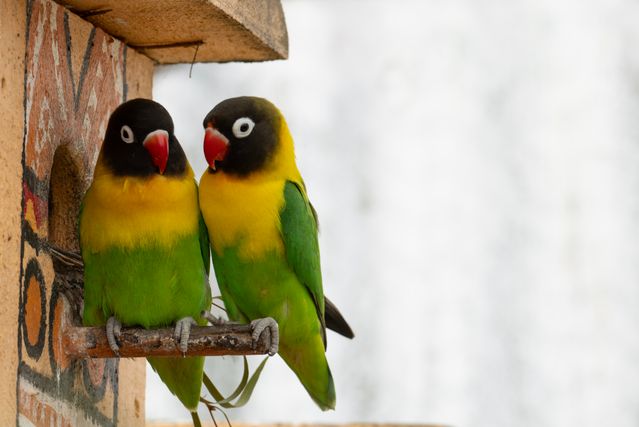
Named for the striking black facial mask contrasting with their bright green or blue body. Their red beak adds another pop of color to their dramatic appearance.
Energetic Personality
Known for their active and playful nature. They love to climb, swing, and explore their environment with endless enthusiasm and curiosity.
Strong Bonds
Form deep attachments to their owners. Once bonded, they seek attention and affection through cuddling, preening, and interactive play.
Intelligent & Curious
Quick learners who enjoy mental challenges. They thrive with puzzle toys, foraging opportunities, and trick training that engages their sharp minds.
Pros
- Dramatic black facial mask is visually striking
- Energetic and playful personality is entertaining
- Form strong bonds with affectionate behavior
- Intelligent and can learn tricks with training
- Compact size suitable for smaller living spaces
Cons
- Can be noisy with frequent high-pitched vocalizations
- Require substantial daily interaction and mental stimulation
- May bite when fearful or territorial
- Need variety of toys to prevent destructive boredom
- Can be aggressive toward other birds if not properly introduced
Care Requirements
What you need to know to keep your Masked Lovebird healthy and happy

Exercise
60 minutes daily
Masked Lovebirds need daily out-of-cage time for flying and exploration. Provide climbing structures and interactive toys. Rotate toys regularly to maintain interest.

Grooming
Daily spot cleaning, weekly deep clean
Clean food and water containers daily. Remove uneaten fresh food promptly. Weekly deep clean with bird-safe disinfectant. Offer shallow bathing opportunities.

Nutrition
Quality pellet diet as primary food. Supplement with fresh vegetables, fruits, and limited seeds. Avoid toxic foods like avocado and chocolate. Provide fresh water daily.
Training Timeline
Acclimation Period
Give your lovebird time to adjust to their new surroundings. Maintain a calm environment and consistent feeding schedule to build security.
Building Trust
Offer treats through cage bars and spend time near the cage speaking softly. Associate your presence with positive experiences like favorite treats.
Handling Training
Teach step-up command using positive reinforcement. Work on handling techniques gradually. Be patient and consistent with training sessions.
Advanced Training
Teach tricks targeting their natural behaviors like climbing and waving. Continue strengthening bond through play and positive interaction.
Health Information
Common health concerns and prevention tips for Masked Lovebird
Common Health Issues
- Respiratory infections from poor air quality or drafts
- Nutritional deficiencies from improper diet
- Feather plucking from stress, boredom or lack of stimulation
- Egg binding in breeding females
- Psittacine beak and feather disease
Prevention Tips
- Provide balanced diet with pellets as main component
- Ensure proper ventilation and temperature control
- Offer varied toys and enrichment activities
- Schedule regular vet checkups with avian specialist
- Maintain clean environment with proper hygiene
Ready to Welcome a Masked Lovebird?
We've got everything you need to prepare for your new Masked Lovebird
Find Masked Lovebirds Near You