
Zebra Finch
The Cheerful Songster
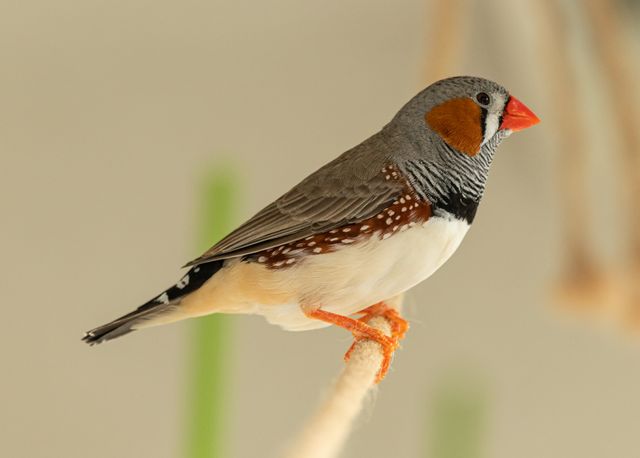
Zebra Finches are small, active birds known for their cheerful songs and social nature. Perfect for those who enjoy watching and listening to birds without the intensive handling requirements of parrots.
Why Zebra Finchs Make Special Companions
Delightful Singers
Male zebras produce cheerful, rhythmic songs throughout the day. Their vocalizations are pleasant and not overly loud, perfect for background ambiance.
Social Birds
Zebras thrive in pairs or small groups. Watching their interactions and social behaviors is fascinating and provides endless entertainment.
Low Maintenance
These small finches require less intensive care than parrots. They're ideal for busy people or those unable to handle birds daily.
Beautiful Varieties
Available in striking color mutations including classic gray, fawn, white, and orange-breasted varieties with distinct patterns.
Pros
- Pleasant, cheerful songs that aren't excessively loud
- Social birds that enjoy the company of their own kind
- Low maintenance compared to parrot species
- Fascinating to watch and observe their behaviors
- Small size perfect for limited space situations
Cons
- Not handleable and prefer not to be touched by humans
- Require same-species companionship for wellbeing
- Can be messy with seed hulls scattered outside the cage
- Limited interaction with owners compared to parrots
- Shorter lifespan than many other pet bird species
Care Requirements
What you need to know to keep your Zebra Finch healthy and happy

Exercise
0 minutes daily
Zebras get their exercise within their cage through flying between perches. Provide a flight cage at least 30 inches long for adequate flying space. Multiple perches at different heights encourage activity.

Grooming
Weekly cleaning
Clean food and water dishes daily. Replace soiled cage paper weekly. Deep clean cage and perches monthly. Provide shallow dish for bathing several times weekly.

Nutrition
Quality finch seed mix as the base, supplemented with egg food, vegetables, and sprouted seeds. Provide fresh water daily. Cuttlebone for calcium and mineral intake.
Training Timeline
Acclimation
Allow new finches to settle into their cage without disturbance. Keep them in a quiet area away from direct sunlight and drafts. Provide hiding spots for security.
Observation Period
Spend time quietly observing your finches to learn their behaviors and personalities. Ensure they're eating, drinking, and interacting normally.
Trust Building
Speak softly near the cage to acclimate them to your presence. Offer treats through the bars. Move slowly around their cage to avoid startling them.
Environmental Enrichment
Rotate toys and perches to maintain interest. Provide nesting material even if not breeding. Ensure continued social interaction between flock members.
Health Information
Common health concerns and prevention tips for Zebra Finch
Common Health Issues
- Respiratory infections from poor ventilation or drafts
- Air sac mites causing breathing difficulties
- Egg binding in females
- Scaly face mites around beak and eyes
- Obesity from lack of flying space
Prevention Tips
- Provide adequate cage space for flying and exercise
- Maintain good ventilation without placing cage in drafts
- Supply balanced diet with appropriate calcium levels
- Keep cage clean with regular paper changes
- Monitor for changes in behavior, appetite, or droppings
Ready for Zebra Finches?
We've got everything you need to prepare for your new Zebra Finch
Find Zebra Finches Near You