
Balinese
The Graceful Longhaired Siamese
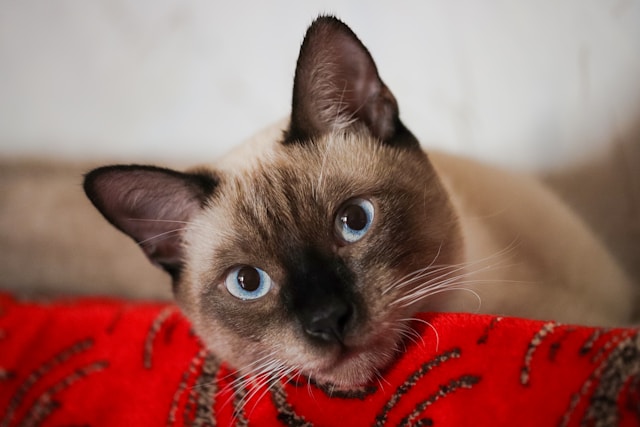
Balinese cats are essentially longhaired Siamese with the same striking color points and sapphire blue eyes, wrapped in a flowing silky coat. They are slightly less demanding than Siamese, produce less Fel d 1 protein, and shed less thanks to their single coat.
Why Balinese Are the Elegant Siamese Alternative
Siamese in a Silk Gown
Balinese are genetically Siamese cats carrying a recessive longhair gene. They share the same color points and blue eyes in an elegant flowing coat.
Lower Allergen Levels
Balinese produce less Fel d 1 protein than most cats and are often listed among breeds better tolerated by allergy sufferers, though no cat is truly hypoallergenic.
Slightly Softer Personality
While still vocal and social like Siamese, Balinese tend to be slightly less intense and demanding, making them a gentler alternative.
Highly Intelligent
Balinese share the Siamese intelligence and can learn tricks, solve puzzles, and communicate with an impressive vocabulary of sounds.
Pros
- Lower Fel d 1 levels may suit mild allergy sufferers
- Less intense personality than purebred Siamese
- Single coat with less shedding than double-coated breeds
- Stunningly beautiful with flowing colorpoint coat
- Exceptionally long lifespan for a pedigree cat
Cons
- Still vocal, though softer than Siamese
- Needs significant social interaction and companionship
- Not truly hypoallergenic despite lower allergen levels
- Prone to same health issues as Siamese
- Can develop separation anxiety without enough attention
Care Requirements
What you need to know to keep your Balinese healthy and happy

Exercise
30 minutes daily
Balinese are active and graceful. Provide climbing trees, interactive toys, and daily play sessions. They enjoy fetch and benefit from puzzle feeders for mental stimulation.

Grooming
Twice-weekly brushing
Despite their longer coat, Balinese have no undercoat, so matting is rare. Twice-weekly brushing keeps their silky coat flowing and reduces shedding. Much easier than double-coated longhairs.

Nutrition
Feed high-quality cat food appropriate for their age and activity level. Balinese tend to stay lean and active but should be monitored to prevent obesity as they age.
Training Timeline
Early Bonding
Balinese kittens bond quickly and deeply. Start handling, socialization, and grooming routines immediately to build trust and comfort.
Trick Training
Use their intelligence and social nature for training. Balinese can learn fetch, sit, come, and enjoy positive reinforcement with treats and praise.
Social Development
Expose to various people and situations. Practice brief separations to build independence. Consider a companion cat if your Balinese will be alone often.
Enrichment Routine
Establish an ongoing enrichment routine with rotating toys, new challenges, and daily interactive play to satisfy their active, intelligent minds.
Health Information
Common health concerns and prevention tips for Balinese
Common Health Issues
- Amyloidosis (kidney and liver disease)
- Dental disease and gingivitis
- Progressive retinal atrophy (PRA)
- Heart disease (dilated cardiomyopathy)
- Respiratory infections
Prevention Tips
- Regular kidney function monitoring with bloodwork
- Dental care starting from kittenhood
- Annual eye examinations
- Cardiac screening at annual checkups
- Keep vaccinations current and monitor respiratory health
Ready to Meet Your Balinese?
We've got everything you need to prepare for your new Balinese
Find Balinese Breeders