
Devon Rex
The Playful Pixie of the Cat World
Devon Rex cats are mischievous, curly-coated charmers with oversized ears, elfin faces, and irrepressible personalities. Unlike the Cornish Rex, their curls come from a completely different gene. They are notorious heat seekers and dedicated food enthusiasts.
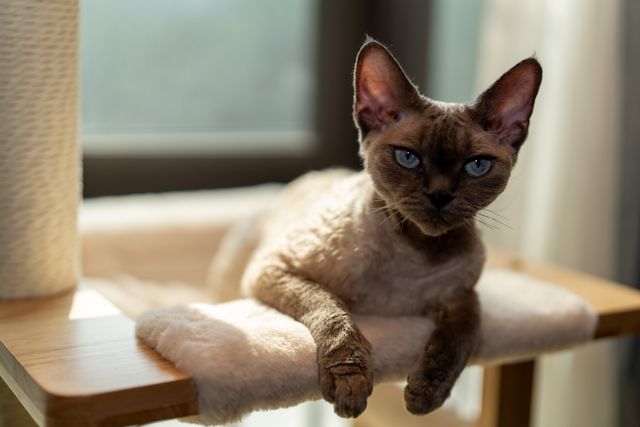
Why Devon Rex Cats Are Unforgettable Pixie Companions
Unique Curly Coat
Their wavy, fragile coat is caused by a different gene than the Cornish Rex. Some Devon Rex develop bald patches, which is normal for the breed.
Heat Seekers
Devon Rex are obsessed with warmth. They'll burrow under blankets, perch on warm electronics, and drape themselves across your shoulders for body heat.
Natural Clowns
These cats are born entertainers with an endless repertoire of silly antics, acrobatic stunts, and attention-grabbing performances.
Food-Motivated
Devon Rex are notably food-driven and will steal snacks if given the chance. This makes them easy to train but prone to weight gain.
Pros
- Extremely affectionate and love to cuddle
- Highly trainable due to food motivation
- Entertaining and clownish personalities
- Good with children, dogs, and other cats
- Minimal shedding compared to most breeds
Cons
- Fragile coat can develop bald patches
- Strong food drive requires careful portion control
- Sensitive to cold and needs warm environments
- Can be overly mischievous and get into everything
- Prone to hereditary myopathy and skin conditions
Care Requirements
What you need to know to keep your Devon Rex healthy and happy

Exercise
30 minutes daily
Devon Rex are agile and playful. Provide cat trees, interactive toys, and daily play sessions. Their food motivation makes treat-dispensing puzzle toys ideal.

Grooming
Gentle weekly care
Their delicate coat should be handled carefully. Avoid heavy brushing as it can damage fragile curls. Occasional gentle wiping with a soft cloth is sufficient. Clean ears regularly.

Nutrition
Monitor food intake closely as Devon Rex are notoriously food-obsessed and prone to obesity. Feed measured portions of high-quality food and secure cabinets and countertops from food theft.
Training Timeline
Gentle Handling
Introduce gentle handling of their delicate coat and oversized ears. Start warmth routines with heated beds and cozy blankets.
Trick Training
Use their food motivation for training. Devon Rex excel at learning tricks with treat rewards. Start with sit, come, and high-five.
Boundary Training
Teach kitchen counter and food boundaries early. Devon Rex are clever food thieves and need consistent rules about where they can and cannot go.
Weight Management
Establish portion control habits. Monitor weight regularly. Continue enrichment with puzzle feeders that slow eating and provide mental stimulation.
Health Information
Common health concerns and prevention tips for Devon Rex
Common Health Issues
- Devon Rex myopathy (hereditary muscle condition)
- Patellar luxation
- Hypertrophic cardiomyopathy (HCM)
- Skin conditions including malassezia dermatitis
- Dental disease
Prevention Tips
- Buy from breeders who screen for Devon Rex myopathy
- Regular cardiac screenings for HCM
- Maintain skin hygiene with gentle cleaning
- Monitor for any muscle weakness or stiffness
- Regular dental care and veterinary checkups
Ready to Meet Your Devon Rex?
We've got everything you need to prepare for your new Devon Rex
Find Devon Rex Breeders