
Cherry Barb
The Peaceful Red Beauty
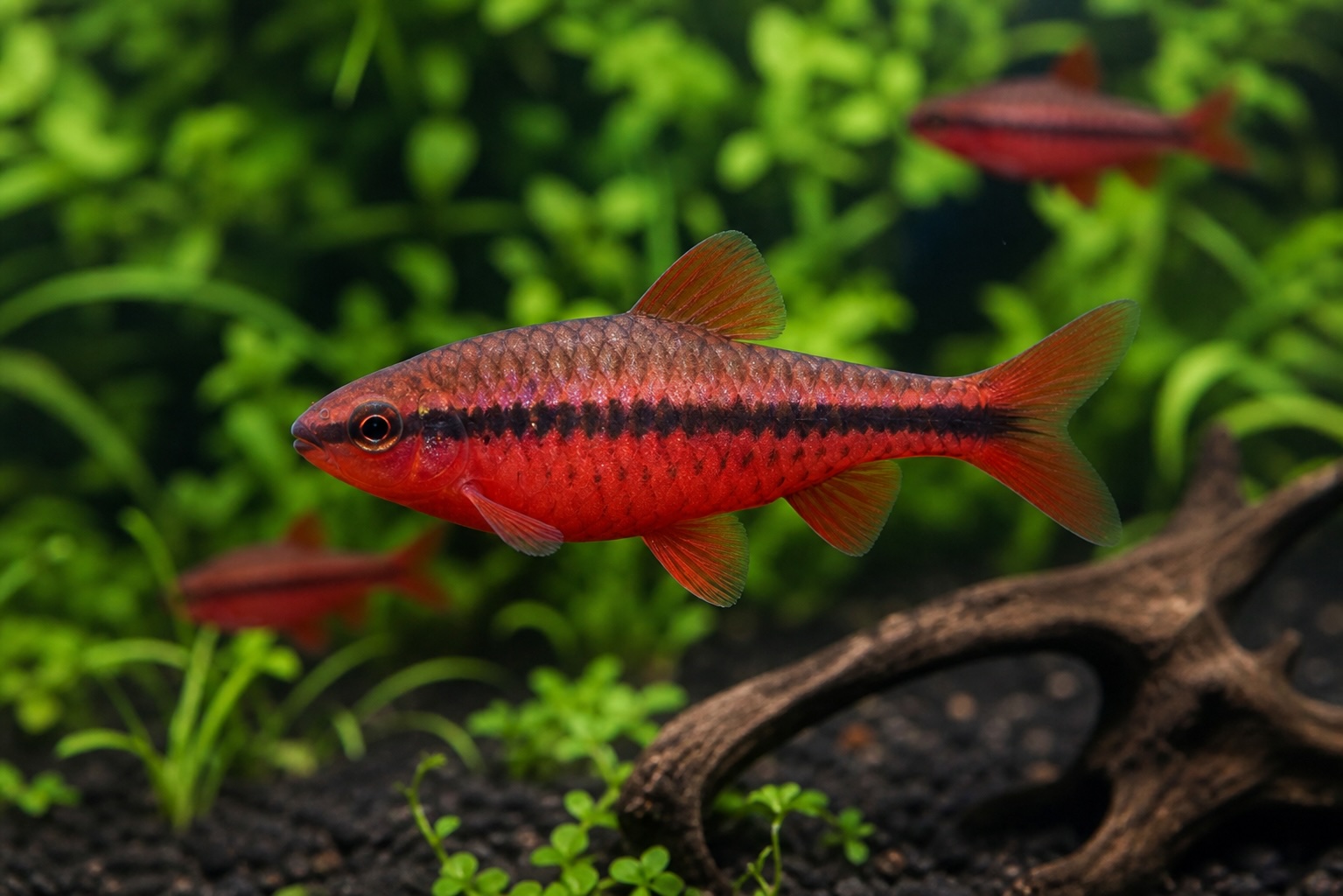
Cherry Barbs are small, peaceful cyprinids known for the vibrant red coloration of males. Unlike many barb species, they are gentle and non-aggressive, making them perfect for peaceful community tanks.
Why Cherry Barbs Are Perfect for First-Time Owners
Beautiful Colors
Males display stunning cherry-red coloration, especially during breeding. Females have attractive brownish-red tones with horizontal stripes.
Gentle Nature
Unlike most barbs, Cherry Barbs are peaceful and non-aggressive. They're perfect for community tanks with other small, gentle fish.
Planted Tank Friendly
These shy fish feel most secure in heavily planted tanks. They won't damage plants and will spend hours swimming through leaves and exploring.
Hardy & Adaptable
Cherry Barbs tolerate a range of water conditions and are forgiving of beginner mistakes. Once established, they're quite resilient.
Pros
- Vibrant red coloration in males is stunningly beautiful
- Peaceful temperament unlike most aggressive barb species
- Thrive in planted aquariums and don't damage plants
- Hardy and adaptable to various water conditions
- Active swimmers that add movement to mid and lower tank levels
Cons
- Must be kept in groups of at least 6 for confidence
- Shy fish that need plants and hiding places to feel secure
- Color intensity depends on health and breeding condition
- Can be outcompeted for food by more aggressive eaters
- Males may show mild territorial behavior during breeding
Care Requirements
What you need to know to keep your Cherry Barb healthy and happy

Exercise
15 minutes daily
Cherry Barbs are active swimmers that occupy middle to lower tank levels. A 10-15 gallon tank can house 6-8 cherry barbs. They prefer heavily planted tanks with open swimming areas and hiding spots.

Grooming
Weekly partial water changes
Perform 25% water changes weekly. Test water parameters regularly. Keep ammonia and nitrite at zero, nitrate under 30ppm. Cherry Barbs appreciate clean, well-maintained water.

Nutrition
Feed high-quality tropical flakes or small pellets 2-3 times daily. Only what they consume in 1-2 minutes. Supplement with frozen foods like brine shrimp and bloodworms weekly for optimal color.
Training Timeline
Acclimation Period
Float the sealed bag in tank for 15 minutes to equalize temperature. Add small amounts of tank water every 10 minutes for 30-45 minutes. Release gently and keep lights off for the first day.
Settling In
Feed small amounts 2-3 times daily. Your cherry barbs may hide initially in plants. This is normal shy behavior. They'll become more confident over time.
Schooling Behavior
Your cherry barbs should be schooling together confidently. Male colors may intensify. They'll spend time exploring plants and swimming in open areas when comfortable.
Breeding Season
Males may display intense red colors and courtship behavior. They may spawn in planted tanks. Provide dense plant cover for eggs and fry. Maintain excellent water quality.
Health Information
Common health concerns and prevention tips for Cherry Barb
Common Health Issues
- Ich (white spot disease) - parasitic infection common with temperature changes
- Fin rot - bacterial or fungal infection causing ragged fins from poor water quality
- Stress-related illness - from lack of hiding places or being kept alone
- Swim bladder issues - usually from overfeeding or improper food
- Color loss - indicates stress, poor health, or inadequate diet
Prevention Tips
- Always keep at least 6 cherry barbs together for confidence
- Provide plenty of plants and hiding places in the tank
- Maintain stable water temperature between 72-79F
- Perform regular water changes to maintain water quality
- Feed a varied diet to maintain vibrant coloration
Ready to Add Cherry Barbs to Your Aquarium?
We've got everything you need to prepare for your new Cherry Barb
Find Cherry Barbs Near You