
Corydoras Catfish
The Friendly Bottom Dweller
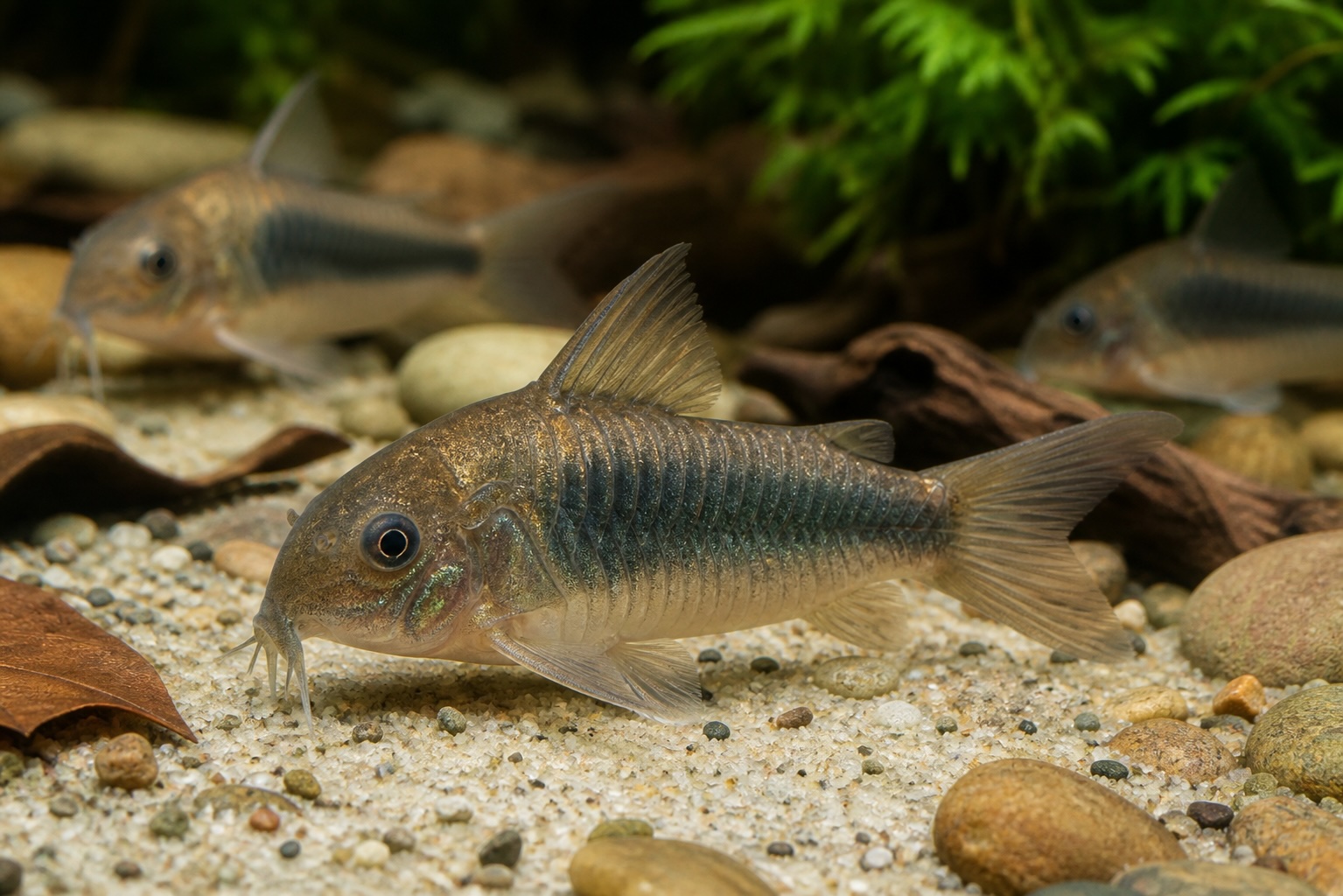
Corydoras are peaceful, social catfish that live at the bottom of the aquarium. Known for their adorable appearance and helpful nature, they're excellent additions to community tanks and help keep the substrate clean.
Why Corydoras Are Perfect for First-Time Owners
Adorable Personality
These peaceful catfish have endearing behaviors like resting on their pectoral fins and swimming to the surface for air. They're fun to watch and interact with.
Social Creatures
Corydoras thrive in groups and display fascinating schooling behavior. They're more active and confident when kept with at least 5-6 of their own kind.
Tank Cleaners
These helpful catfish scavenge leftover food from the substrate, helping maintain water quality. They're nature's little cleanup crew.
Very Peaceful
Corydoras are among the most peaceful aquarium fish. They never bother other fish and are perfect for community tanks with small, gentle species.
Pros
- Adorable appearance with peaceful, endearing behaviors
- Social fish that thrive in groups and show interesting behaviors
- Help clean the substrate by scavenging leftover food
- Extremely peaceful and safe with all community fish
- Hardy and adaptable to various water conditions
Cons
- Must be kept in groups of at least 5-6 to feel secure
- Sensitive to sharp substrate that can damage their barbels
- Need smooth sand or rounded gravel, not sharp-edged substrates
- Prone to barbel erosion from poor water quality or sharp gravel
- Can be outcompeted for food by more aggressive eaters
Care Requirements
What you need to know to keep your Corydoras Catfish healthy and happy

Exercise
10 minutes daily
Corydoras are bottom dwellers that need horizontal floor space. A 20-gallon tank with soft sand substrate is ideal for 5-6 corydoras. They appreciate smooth rocks, driftwood, and plants for cover.

Grooming
Weekly partial water changes
Perform 25% water changes weekly. Corydoras are sensitive to water quality, so test parameters regularly. Keep ammonia and nitrite at zero, nitrate under 20ppm. Vacuum the sand surface gently to remove waste.

Nutrition
Feed sinking pellets or wafers specifically formulated for bottom dwellers 1-2 times daily. Supplement with frozen bloodworms, brine shrimp, and blanched vegetables weekly. Ensure food reaches the bottom.
Training Timeline
Acclimation Period
Float the sealed bag in tank for 15 minutes to equalize temperature. Add small amounts of tank water every 10 minutes for 30-45 minutes. Release gently and keep lights off for the first day.
Settling In
Feed sinking pellets after lights are dimmed - they're shy eaters initially. Your corydoras may hide initially. Provide hiding places and smooth substrate for their comfort.
Group Behavior
Your corydoras should be schooling together and actively foraging. Watch for them swimming to the surface for air - this is normal behavior. They should be more confident and visible.
Established Community
Your corydoras are fully acclimated and part of the tank cleanup crew. Maintain consistent feeding schedule. Consider adding more corydoras to strengthen the school if desired.
Health Information
Common health concerns and prevention tips for Corydoras Catfish
Common Health Issues
- Barbel erosion - damage to sensitive whiskers from sharp substrate or poor water quality
- Ich (white spot disease) - parasitic infection common with temperature changes
- Skin/fin rot - bacterial or fungal infection from poor water conditions
- Swim bladder issues - usually from constipation or improper diet
- Stress-related illness - from being kept alone or with aggressive fish
Prevention Tips
- Always keep at least 5-6 corydoras together - they need a group
- Use smooth sand substrate to protect their delicate barbels
- Maintain excellent water quality with regular water changes
- Provide sinking food that reaches the bottom before other fish eat it
- Avoid keeping with aggressive bottom-dwelling species
Ready to Add Corydoras to Your Aquarium?
We've got everything you need to prepare for your new Corydoras Catfish
Find Corydoras Near You