
Dwarf Gourami
The Colorful Labyrinth Fish
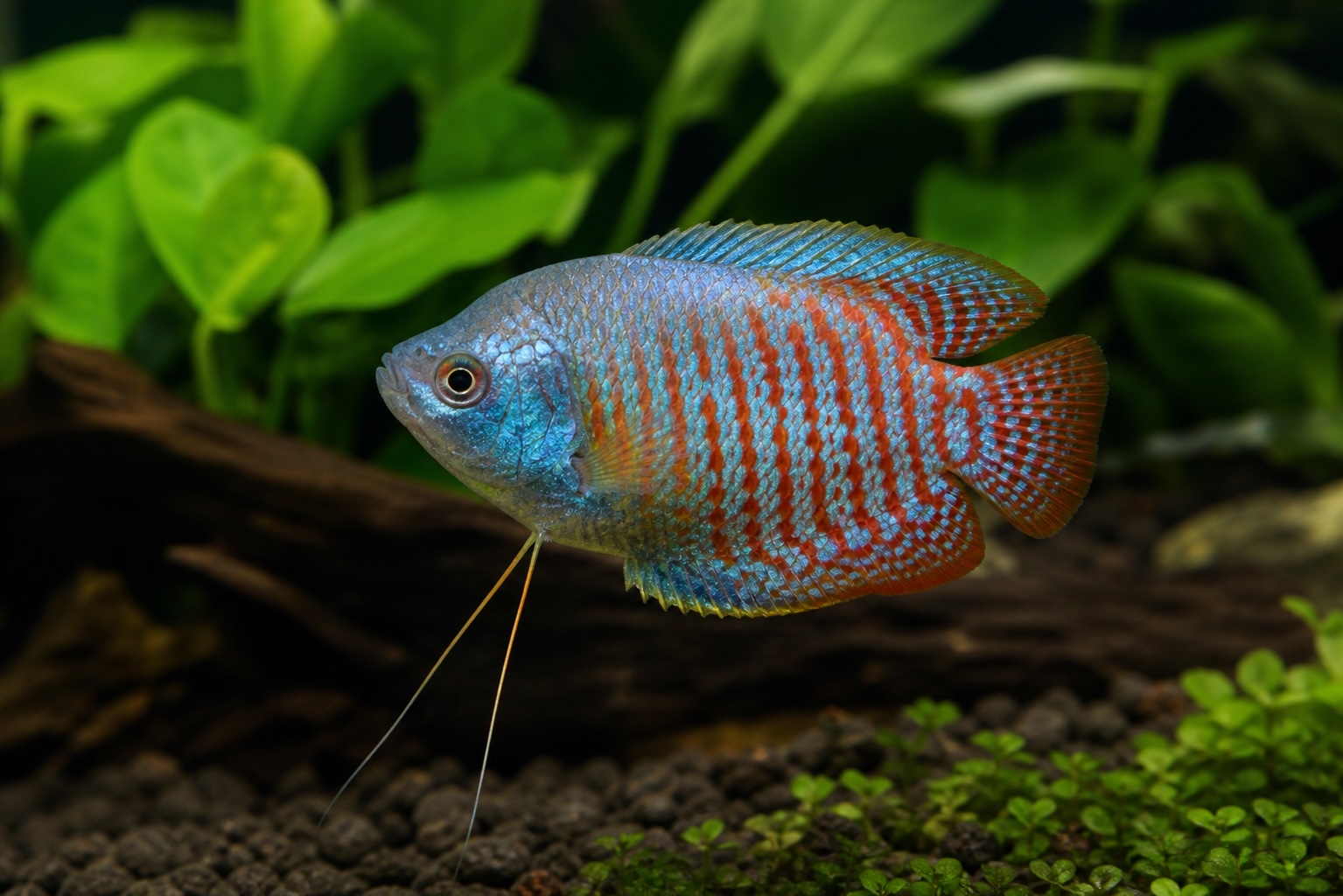
Dwarf Gouramis are small, peaceful labyrinth fish known for their stunning iridescent colors. Like Bettas, they breathe atmospheric air, making them unique and interesting additions to community tanks.
Why Dwarf Gouramis Are Perfect for First-Time Owners
Stunning Colors
Males display brilliant blue, red, and orange iridescent patterns. Their colors shift beautifully under different lighting conditions, creating mesmerizing displays.
Unique Breathing
As labyrinth fish, Dwarf Gouramis breathe atmospheric air. Watching them surface for air is fascinating and sets them apart from most aquarium fish.
Peaceful Nature
Unlike many gourami species, dwarfs are generally peaceful and make excellent community fish. They're shy but not aggressive toward tankmates.
Planted Tank Perfect
These fish thrive in heavily planted aquariums. They appreciate floating plants that provide cover and reduce light intensity, making them feel secure.
Pros
- Brilliant iridescent colors that rival saltwater fish
- Unique labyrinth breathing behavior is fascinating to watch
- Generally peaceful and suitable for community tanks
- Thrive in planted tanks with floating vegetation
- Hardier than many other gourami species
Cons
- Prone to dwarf gourami disease, a viral infection with no cure
- Shy fish that need plants and hiding places to feel secure
- Males can be territorial toward each other - keep one per tank
- Require warm water (77-82F) and stable conditions
- Can be outcompeted for food by more aggressive eaters
Care Requirements
What you need to know to keep your Dwarf Gourami healthy and happy

Exercise
15 minutes daily
Dwarf Gouramis inhabit the middle and upper levels of the tank. A 10-gallon tank is suitable for one, but 20+ gallons is better for a community. They need access to the surface to breathe air.

Grooming
Weekly partial water changes
Perform 25% water changes weekly. Dwarf Gouramis are sensitive to water quality, so test parameters regularly. Keep ammonia and nitrite at zero, nitrate under 20ppm. Maintain stable temperature.

Nutrition
Feed high-quality tropical flakes or small pellets 2-3 times daily. Only what they consume in 2 minutes. Supplement with frozen foods like bloodworms and brine shrimp. They eat at the surface.
Training Timeline
Acclimation Period
Float the sealed bag in tank for 15-20 minutes to equalize temperature. Add small amounts of tank water every 10 minutes for 45 minutes. Release gently and keep lights off for 24 hours.
Settling In
Feed small amounts 2-3 times daily at the surface. Your gourami may hide initially. Provide floating plants and gentle water flow. Watch for surface breathing.
Confidence Building
Your gourami should be exploring more confidently. Colors may intensify with good health. They'll establish preferred resting spots and surface areas for breathing.
Breeding Behavior
Males may build bubble nests at the surface. They may display courtship behaviors. Provide floating plants for nest building. Maintain excellent water quality for health.
Health Information
Common health concerns and prevention tips for Dwarf Gourami
Common Health Issues
- Dwarf gourami disease (Iridovirus) - viral infection with no cure, causes loss of color and appetite
- Ich (white spot disease) - parasitic infection common with temperature changes
- Fin rot - bacterial or fungal infection from poor water quality
- Stress-related illness - from lack of hiding places or aggressive tankmates
- Bacterial infections - from poor water quality or injuries
Prevention Tips
- Purchase from reputable sources to minimize dwarf gourami disease risk
- Maintain stable warm water temperature between 77-82F
- Provide plenty of plants and floating vegetation for security
- Keep only one male dwarf gourami per tank unless breeding
- Perform regular water changes to maintain excellent water quality
Ready to Add a Dwarf Gourami to Your Aquarium?
We've got everything you need to prepare for your new Dwarf Gourami
Find Dwarf Gouramis Near You