
Corn Snake
The Active Beginner is Snake
Corn snakes are fantastic first snakes due to their active nature, simple care, and beautiful colors. They are more active than ball pythons and great for owners who want to watch their snake explore.
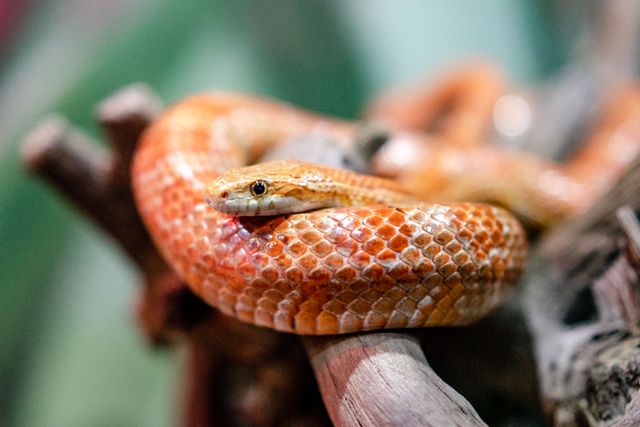
Why Corn Snakes Are Perfect for First-Time Snake Owners
Active & Curious
More active than many snakes, making them entertaining to watch. They enjoy exploring and climbing during waking hours.
Excellent Feeders
Rarely refuse food, making them reliable eaters. No fasting periods like ball pythons - consistent feeding response.
Gentle Disposition
Rarely bite and tolerate handling well when acclimated. One of the most docile snake species available.
Beautiful Colors
Available in countless morphs from classic orange to amelanistic, caramel, lavender, and many stunning color variations.
Pros
- Very active and curious, making them fun to observe
- Excellent feeders that rarely refuse food
- Docile temperament and rarely bite when handled
- Simple care requirements and forgiving of minor mistakes
- Wide variety of beautiful color morphs available
Cons
- More active than some snakes - can be escape artists
- Require secure enclosures with tight-fitting lids
- Can be more nervous during handling than ball pythons
- May musk if stressed (though rare with regular handling)
- Shedding requires proper humidity to prevent issues
Care Requirements
What you need to know to keep your Corn Snake healthy and happy

Exercise
20 minutes daily
Corn snakes benefit from handling sessions 3-4 times per week. They are more active than many snakes and enjoy exploring supervised areas. Provide climbing branches for natural exercise.

Grooming
Weekly spot clean, monthly deep clean
Remove waste and uneaten food promptly. Clean water bowl weekly. Provide a humid hide during shedding to ensure complete shed. Ensure enclosure is escape-proof.

Nutrition
Feed appropriately sized frozen/thawed mice. Hatchlings eat every 5-7 days, adults every 7-10 days. Prey should create a small visible lump after swallowing but not be overly large.
Training Timeline
Hatchling Acclimation
Allow 1-2 weeks of no handling to settle in. Set up proper temperature gradient (85F warm side). Ensure feeding response is established before handling.
Handling Introduction
Begin short handling sessions of 5 minutes, 2-3 times weekly. Support the body fully during handling. Monitor for stress signs.
Socialization Period
Increase handling duration and frequency. Encourage exploration outside enclosure under supervision. Upgrade to larger enclosure as needed.
Adult Routine
Establish regular handling routine. Feed every 7-10 days. Ensure enclosure remains escape-proof as snake grows. Annual vet checkups recommended.
Health Information
Common health concerns and prevention tips for Corn Snake
Common Health Issues
- Incomplete shed from insufficient humidity
- Respiratory infections from incorrect temperatures
- Mites - external parasites common in snakes
- Anorexia - though less common than in ball pythons
- Scale rot from damp substrate
Prevention Tips
- Maintain proper temperature gradient (82-85F warm side)
- Provide a humid hide during shedding periods
- Keep enclosure clean and dry with appropriate substrate
- Quarantine new snakes for at least 3 months
- Ensure fresh water is always available
Ready to Meet Your Corn Snake?
We've got everything you need to prepare for your new Corn Snake
Find Corn Snakes Near You