
Green Tree Python
The Arboreal Beauty
Green tree pythons are stunning arboreal snakes famous for their bright green coloration and distinctive resting posture. Native to Australia and New Guinea, these beautiful snakes require specialized care but reward dedicated keepers with breathtaking appearance.
Why Green Tree Pythons Captivate Reptile Enthusiasts
Stunning Beauty
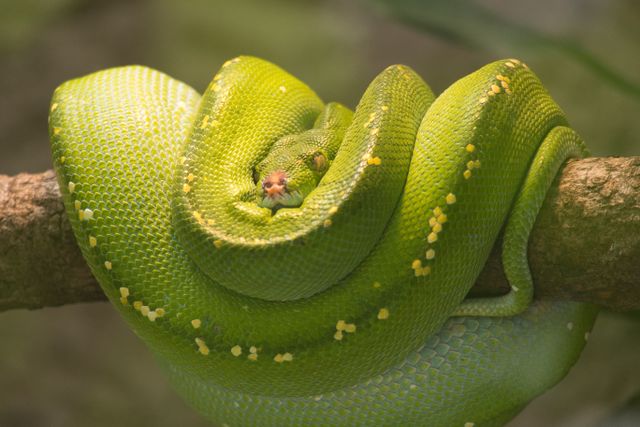
Vibrant green coloration with blue or yellow markings makes them among the most visually striking snakes. Their appearance is truly breathtaking.
Arboreal Specialists
Perfectly adapted for life in the canopy with strong prehensile tails. Their characteristic saddle-like resting position is distinctive and beautiful.
Display Animals
Primarily observation animals that display natural behaviors in properly set up enclosures. Their nocturnal habits offer unique viewing opportunities.
Hardy Captives
When properly set up, they adapt well to captivity. Established captive-bred animals are generally hardy and thrive with appropriate care.
Pros
- Unbelievably beautiful with vibrant green coloration
- Interesting arboreal behaviors to observe
- Long lifespan with proper care
- Generally hardy once properly established
- Available as captive-bred animals
Cons
- Require specific tall enclosures with proper humidity
- Sensitive to temperature and humidity fluctuations
- Can be defensive and may bite when stressed
- Best kept as display animals with minimal handling
- Specialized heating and equipment requirements
Care Requirements
What you need to know to keep your Green Tree Python healthy and happy

Exercise
10 minutes daily
Green tree pythons exercise naturally through climbing and moving within their enclosure. They are primarily display animals that do not require additional exercise or handling.

Grooming
As needed spot cleaning
Remove waste promptly when noticed. Maintain proper humidity through misting systems. Replace substrate every 2-3 months. Provide higher humidity during shedding.

Nutrition
Feed appropriately sized rodents every 7-10 days. juveniles feed weekly. Thaw frozen prey completely before feeding. Avoid handling for several days after feeding.
Training Timeline
Critical Establishment
Minimal to no handling during first few months. Establish proper temperature and humidity gradients. Ensure consistent feeding response.
Acclimation Period
Continue focus on proper care rather than handling. Monitor feeding and shedding closely. Provide appropriate perching options.
Gradual Trust
Most green tree pythons remain display animals. Any handling should be brief and minimal. Focus on maintaining proper environmental conditions.
Established Care
Maintain consistent care routine. Monitor weight and health annually. Veterinary checkups recommended for long-term health maintenance.
Health Information
Common health concerns and prevention tips for Green Tree Python
Common Health Issues
- Respiratory infections from incorrect temperature or humidity
- Shedding difficulties from inadequate humidity
- Regurgitation from handling too soon after feeding
- Stress-related illness from excessive handling
Prevention Tips
- Maintain proper temperature gradient (88-90F hotspot)
- Keep humidity at 50-70% with daily fluctuations
- Never handle for at least 48 hours after feeding
- Provide adequate perching of appropriate diameter
- Find a veterinarian experienced with arboreal snakes
Ready to Care for a Green Tree Python?
We've got everything you need to prepare for your new Green Tree Python
Find Green Tree Pythons Near You