
Leopard Gecko
The Perfect Starter Gecko
Leopard geckos are arguably the best reptile for beginners. Their small size, simple care requirements, and gentle nature make them ideal for anyone new to reptile keeping.
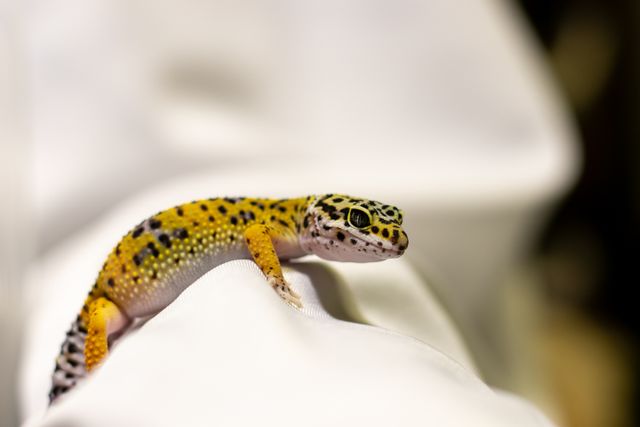
Why Leopard Geckos Are Perfect for First-Time Reptile Owners
Simple Housing
Thrives in a 20-gallon tank with basic setup. No special UVB lighting required, though low levels are beneficial.
Crepuscular Nature
Most active at dawn and dusk. Perfect for owners who work during the day but want evening interaction.
Insectivore Diet
Simple diet of insects supplemented with calcium. Clean feeding with no mess from vegetables or fruits.
Beautiful Varieties
Available in many stunning color morphs from wild-type to bright yellows, oranges, and even patternless forms.
Pros
- Very simple care requirements perfect for beginners
- Small size makes housing affordable and space-efficient
- Long lifespan of 15-20 years with proper care
- Gentle temperament and rarely bite when handled properly
- Available in many beautiful color morphs
Cons
- Require regular feeding of live insects
- Can be prone to shedding issues if humidity is too low
- Tail can drop if handled roughly (though it regenerates)
- Nocturnal activity means less daytime interaction
- Calcium supplementation requires careful attention
Care Requirements
What you need to know to keep your Leopard Gecko healthy and happy

Exercise
15 minutes daily
Leopard geckos need supervised time outside their enclosure 2-3 times per week for exploration and exercise. Provide hiding spots during outings. No special lighting required but maintain proper temperature.

Grooming
Weekly spot clean, monthly deep clean
Remove waste and uneaten insects promptly. Clean water dish daily. Provide a moist hide during shedding to prevent stuck shed. Shed skin should come off in one piece.

Nutrition
Feed primarily crickets, mealworms, or dubia roaches. Adults eat every other day, juveniles daily. Dust insects with calcium and vitamin D3 supplement at every feeding for juveniles, every other feeding for adults.
Training Timeline
Acclimation Period
Allow your gecko to settle in for 1-2 weeks before handling. Set up proper temperature zones (88-92F warm side). Offer small insects appropriate for hatchling size.
Handling Foundation
Begin gentle handling sessions of 5 minutes, 2-3 times weekly. Establish feeding routine. Monitor for proper shedding and calcium levels.
Sub-Adult Growth
Increase handling frequency as comfort grows. Transition to adult feeding schedule. Ensure proper weight gain and tail thickness.
Adult Maintenance
Maintain regular feeding and handling routine. Monitor for health issues including metabolic bone disease and impaction. Annual vet checkups recommended.
Health Information
Common health concerns and prevention tips for Leopard Gecko
Common Health Issues
- Metabolic bone disease from calcium deficiency
- Impaction from loose substrate or eating too-large prey
- Shedding problems leading to retained skin on toes and tail
- Cryptosporidium infection causing digestive issues
Prevention Tips
- Always dust feeder insects with calcium supplement
- Use paper towel or tile substrate for juveniles
- Provide a moist hide with damp moss during shedding
- Maintain proper temperature gradient (88-92F warm side)
- Quarantine new geckos before introducing to collection
Ready to Meet Your Leopard Gecko?
We've got everything you need to prepare for your new Leopard Gecko
Find Leopard Geckos Near You