
Panther Chameleon
The Living Rainbow
Panther chameleons are among the most visually stunning reptiles in the world, famous for their remarkable color-changing abilities. Native to Madagascar, these arboreal specialists require dedicated care but reward keepers with breathtaking displays.
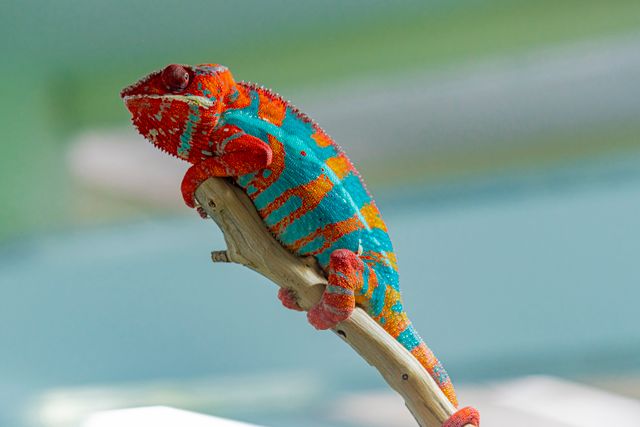
Why Panther Chameleons Fascinate Reptile Enthusiasts
Stunning Colors
Display incredible color changes based on mood, temperature, and lighting. Males show particularly vibrant patterns when courting or defending territory.
Remarkable Vision
Independent eye movement allows them to watch two directions simultaneously. Their eyes can rotate nearly 180 degrees and provide incredible depth perception.
Specialized Hunter
Famous projectile tongue can extend twice their body length to capture insects. Their hunting precision is fascinating to observe.
Arboreal Mastery
Perfectly adapted for life in trees with zygodactyl feet and prehensile tail. They require vertically oriented enclosures with plenty of foliage.
Pros
- Unbelievably beautiful with dramatic color displays
- Fascinating behaviors and specialized adaptations
- Active during the day for observation
- Unique feeding behaviors are entertaining to watch
- Wide variety of locales and color patterns available
Cons
- Require specialized caging with excellent ventilation
- Strict humidity and temperature requirements
- Need daily misting and dripper systems
- Solitary animals that stress easily when housed together
- Shorter lifespan than many other reptiles
Care Requirements
What you need to know to keep your Panther Chameleon healthy and happy

Exercise
20 minutes daily
Chameleons exercise naturally through climbing in their enclosure. Provide a well-planted enclosure with branches of varying diameters. Minimal handling recommended as they stress easily.

Grooming
Daily misting, weekly maintenance
Mist 2-3 times daily to maintain humidity. Provide a dripper system for drinking water. Clean plants and branches weekly. Remove waste immediately.

Nutrition
Feed daily variety of gut-loaded insects (crickets, roaches, flies, worms). Dust insects with calcium daily and vitamins twice weekly. Provide fresh water via misting and dripper.
Training Timeline
Critical Acclimation
Minimal handling during first month. Establish proper hydration through misting. Provide small, appropriately sized insects frequently.
Gradual Exposure
Begin very brief handling if necessary. Focus on establishing proper feeding routine. Ensure enclosure has adequate climbing opportunities.
Limited Interaction
Most chameleons remain display animals. Continue focus on proper care rather than handling. Monitor health closely during growth.
Adult Care
Maintain consistent care routine. Monitor for signs of illness. Veterinary checkups recommended every 6-12 months.
Health Information
Common health concerns and prevention tips for Panther Chameleon
Common Health Issues
- Metabolic bone disease from inadequate UVB or calcium
- Dehydration from insufficient water sources
- Respiratory infections from poor ventilation
- Stress-related illness from excessive handling
Prevention Tips
- Provide high-quality UVB lighting replaced every 6 months
- Maintain humidity through proper misting systems
- Ensure excellent cage ventilation at all times
- Minimize handling and observe from distance
- Find an experienced reptile veterinarian before needed
Ready to Care for a Panther Chameleon?
We've got everything you need to prepare for your new Panther Chameleon
Find Panther Chameleons Near You