
Red-Eared Slider
The Popular Aquatic Turtle
Red-eared sliders are among the most recognizable pet turtles. While rewarding to keep, they require substantial space and clean water - perfect for dedicated owners.
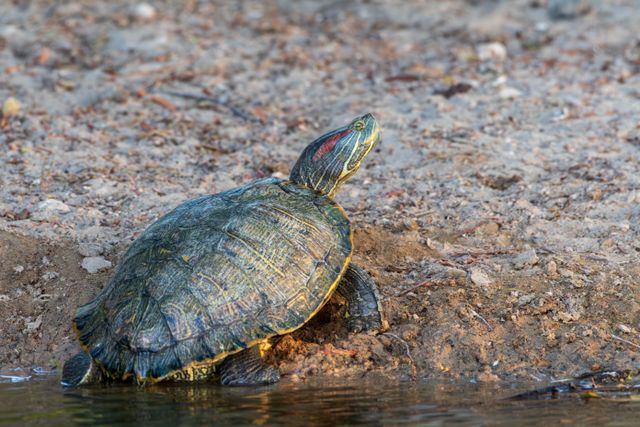
Why Red-Eared Sliders Are Popular But Challenging Pets
Semi-Aquatic
Split their time between swimming and basking. Provide both deep water and dry basking areas for natural behavior.
Basking Enthusiasts
Love to bask under heat lamps for hours. Watching them climb onto basking platforms and extend their limbs is fascinating.
Social Behavior
Can be housed together in adequate space. Often seen stacking on top of each other at basking spots.
Hardy Nature
Tolerant of various conditions once established. One of the hardier turtle species for dedicated keepers.
Pros
- Active and entertaining to watch swimming and basking
- Recognize their owners and may beg for food
- Hardy and tolerate minor care mistakes
- Long-lived with proper care (20-30 years)
- Can become quite interactive with their keepers
Cons
- Require large aquariums (75+ gallons for adults)
- Produce significant waste requiring powerful filtration
- Need both water and basking areas with proper heating
- Can carry salmonella requiring careful hygiene
- Long-term commitment of 20-30 years
Care Requirements
What you need to know to keep your Red-Eared Slider healthy and happy

Exercise
30 minutes daily
Red-eared sliders need swimming space and basking areas. Provide deep water for swimming and a dry basking platform under a heat lamp. 10-12 hours of light daily.

Grooming
Weekly water changes, regular filtration
Perform weekly 25% water changes. Clean filter regularly. Scrub algae off tank walls. Monitor shell health for soft spots or abnormalities.

Nutrition
Omnivorous diet including commercial turtle pellets, leafy greens, and occasional protein (feeder fish, insects). Juveniles need more protein, adults more vegetables. Feed daily for juveniles, every other day for adults.
Training Timeline
Hatchling Setup
Set up appropriate aquarium with filtration and basking area. Maintain water temperature 75-80F. Offer varied diet with more protein. UVB lighting essential.
Growth Phase
Monitor growth rate closely. Ensure shell is hardening properly. Introduce more plant matter to diet. Maintain clean water with regular changes.
Sub-Adult Development
Upgrade to larger enclosure as turtle grows. Transition toward adult diet with more vegetables. Maintain proper basking and UVB access.
Adult Care
Provide minimum 75-gallon enclosure for adults. Feed every other day. Monitor shell health and water quality. Annual vet checkups recommended.
Health Information
Common health concerns and prevention tips for Red-Eared Slider
Common Health Issues
- Shell rot from poor water quality or injuries
- Respiratory infections from incorrect temperature
- Vitamin A deficiency from poor diet
- Metabolic bone disease from insufficient UVB
- Ear abscesses common in captivity
Prevention Tips
- Provide proper UVB lighting and replace bulbs regularly
- Maintain clean water with appropriate filtration
- Offer varied diet with calcium and vitamin supplements
- Keep water temperature 75-80F, basking 88-95F
- Quarantine new turtles before introducing to colony
Ready to Meet Your Red-Eared Slider?
We've got everything you need to prepare for your new Red-Eared Slider
Find Red-Eared Sliders Near You