
Veiled Chameleon
The Majestic Display Reptile
Veiled chameleons are among the most visually striking reptiles. Their color-changing ability, independently moving eyes, and unique behaviors make them fascinating but challenging pets.
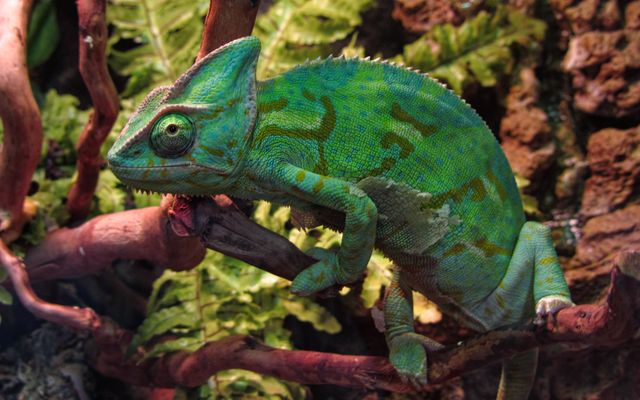
Why Veiled Chameleons Are Advanced but Rewarding Pets
Independent Eyes
Can move each eye independently, watching for prey and predators simultaneously. One of nature is most unique visual adaptations.
Color Changes
Change color based on mood, temperature, and health. While not for camouflage like many believe, it is a beautiful communication method.
Arboreal Masters
Natural tree-dwellers with zygodactyl feet (two toes forward, two back) perfect for gripping branches. Require vertical space.
Projectile Tongues
Can shoot their tongues up to 1.5 times their body length to capture insect prey. Incredible to witness in person.
Pros
- Visually stunning with unique color-changing ability
- Fascinating behaviors to observe including hunting
- Less handling required than many other reptiles
- Enclosure can be a beautiful live planted display
- Independently moving eyes are incredible to watch
Cons
- Require very specific humidity and temperature requirements
- Generally do not tolerate handling well
- Need specialized mesh enclosures, not glass tanks
- High-maintenance watering systems required
- Susceptible to stress and health issues
Care Requirements
What you need to know to keep your Veiled Chameleon healthy and happy

Exercise
0 minutes daily
Chameleons do not require handling for exercise. They exercise naturally by climbing and hunting within their enclosure. Minimize handling to reduce stress.

Grooming
Daily misting, weekly enclosure maintenance
Mist enclosure 2-3 times daily. Provide a dripper system for constant water. Clean plants and branches monthly. Monitor for proper shedding.

Nutrition
Primarily insectivores. Feed crickets, roaches, and worms dusted with calcium. Adults eat every other day, juveniles daily. Gut-load insects for nutrition.
Training Timeline
Hatchling Critical Care
Set up proper mesh enclosure with excellent drainage. Maintain high humidity (60-80%). Feed small insects frequently. Handle minimally if at all.
Growth Phase
Monitor growth and color development. Ensure proper supplementation with calcium without D3 (since UVB is provided). Expand climbing opportunities.
Sub-Adult Development
Transition to larger prey items. Maintain strict humidity and temperature requirements. Monitor for signs of stress or illness.
Adult Care
Adults require large mesh enclosures. Feed every other day. Monitor for health issues including metabolic bone disease. Males and females must be housed separately.
Health Information
Common health concerns and prevention tips for Veiled Chameleon
Common Health Issues
- Metabolic bone disease from insufficient UVB or calcium
- Upper respiratory infections from incorrect temperature
- Dehydration from inadequate watering systems
- Edema (fluid buildup) from poor nutrition
- Stress-related issues from improper housing or handling
Prevention Tips
- Provide proper UVB lighting and replace bulbs every 6 months
- Maintain temperature gradient (72-80F ambient, 95-100F basking)
- Use mesh enclosures with excellent drainage and ventilation
- Install a dripper system and mist daily
- House alone - chameleons are solitary animals
Ready to Meet Your Veiled Chameleon?
We've got everything you need to prepare for your new Veiled Chameleon
Find Veiled Chameleons Near You