
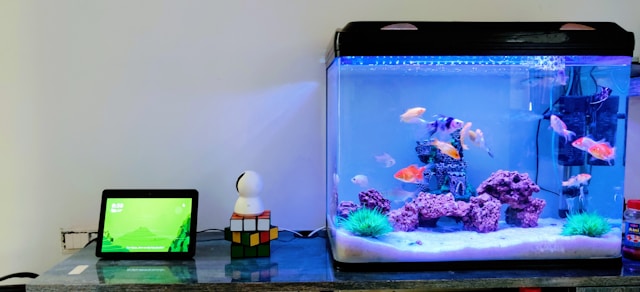
Regular water changes are the most important maintenance task for a healthy aquarium. Understanding why, when, and how to perform water changes properly prevents most common fishkeeping problems and creates a thriving environment for your aquatic pets.
Why Water Changes Matter
Waste Accumulation
Understanding what builds up in aquarium water:
- Fish excrete ammonia continuously
- Uneaten food decomposes and releases toxins
- Plant matter breakdown adds to the bioload
- Beneficial bacteria convert toxins to nitrate
- Nitrate and other dissolved compounds accumulate over time
The Benefits of Regular Changes
Consistent water changes provide:
- Removal of nitrate and other dissolved compounds
- Replenishment of minerals and trace elements
- Stabilization of pH and water chemistry
- Removal of tannins and discoloration
- Overall healthier, more vibrant fish
What Happens Without Changes
Neglected aquariums develop problems:
- Nitrate accumulation stresses fish
- pH crashes from acid buildup
- Algae growth from excess nutrients
- Fish disease susceptibility increases
- Fish growth slows and colors fade
Water Change Schedule
General Guidelines
Basic frequency recommendations:
- Typical aquarium: 20-30% weekly water changes
- Heavily stocked: 30-40% weekly or bi-weekly
- Lightly stocked: 15-20% weekly or bi-weekly
- Planted tanks: 20-30% weekly with nutrient dosing
- Breeding tanks: More frequent, smaller changes (10-15% twice weekly)
Adjusting for Your Situation
Factors that affect frequency:
- Stocking levels (more fish = more changes)
- Feeding amounts (heavy feeding = more changes)
- Filtration capacity
- Plant density (plants absorb some waste)
- Water testing results
Testing Determines Schedule
Let actual parameters guide you:
- Test nitrate weekly before water changes
- Nitrate above 40 ppm indicates need for more frequent or larger changes
- Nitrate below 20 ppm means your schedule is adequate
- Test pH regularly for stability
- Keep a log to identify trends
Water Change Equipment
Essential Tools
Gather these supplies before starting:
- Gravel vacuum/siphon: Removes debris from substrate
- Buckets: Dedicated aquarium use only (clean, no soap residue)
- Water conditioner: Removes chlorine/chloramine
- Thermometer: Match new water temperature
- Test kit: Monitor parameters before and after
Optional But Helpful
Additional useful equipment:
- Python water changer: Makes changes easier with long tubing
- Algae scrubber/pad: Clean glass during water changes
- Water pump: Speed up filling buckets
- Extra heater: Bring new water to temperature faster
- Notebook: Track water change schedule and parameters
Preparing New Water
Temperature Matching
Critical for fish safety:
- Match new water temperature to tank temperature within 1-2°F
- Sudden temperature changes shock and stress fish
- Use a thermometer for accuracy
- Adjust with hot or cold water as needed
- Never add cold water to tropical tanks
Dechlorination
Essential step for tap water:
- Add water conditioner per product instructions
- Chlorine kills beneficial bacteria
- Chloramine requires specific conditioners
- Add conditioner before water enters the aquarium
- Use conditioner with every water change
Mineral Balance
Understanding water chemistry:
- Most conditioners address chlorine/chloramine only
- Some add electrolytes or slime coat protectants
- RO water requires remineralization
- Consistency is more important than exact parameters
- Match new water parameters to tank parameters
Water Change Process
Step-by-Step Guide
Performing a proper water change:
- Turn off equipment: Switch off heater and filter
- Remove water: Use gravel vacuum to siphon out 20-30%
- Vacuum substrate: Clean debris from gravel or sand surface
- Prepare replacement water: Condition and temperature match
- Add new water: Pour slowly to avoid disturbing fish
- Turn equipment back on: Restart filter and heater
- Test parameters: Confirm everything is stable
Gravel Vacuuming
Proper technique for substrate cleaning:
- Insert vacuum into substrate
- Create a siphon by pumping up and down
- Watch debris being pulled out
- Lift and move to next spot before substrate is pulled out
- Clean different areas each week (not entire tank weekly)
Sand Substrate Special Care
Different technique for sand:
- Hold vacuum above sand surface
- Debris sits on top and is easily removed
- Stir sand surface gently to release trapped debris
- Avoid sucking sand into the vacuum
- Clean more thoroughly in areas with visible waste
Advanced Techniques
Python Water Changer
Using a water-changing system:
- Connect to faucet for easy fill and drain
- Eliminates bucket carrying
- Temperature control at the faucet
- Must still use water conditioner
- More expensive but convenient for large tanks
Drip Method for Sensitive Species
For delicate fish or shrimp:
- Add water very slowly over hours
- Prevents parameter shock
- Useful for species that need very stable water
- Can be automated with drip systems
- Often used in quarantine or breeding setups
Multiple Tank Strategies
Efficiency for several aquariums:
- Prepare large batches of conditioned water
- Use pump and tubing to distribute
- Change water in all tanks on same schedule
- Keep dedicated equipment for each tank to prevent disease transmission
- Consider automated water change systems
Special Situations
During Cycling
Water changes while establishing the tank:
- Fishless cycling: perform water changes only if nitrate exceeds 80-100 ppm
- Fish-in cycling: change water whenever ammonia or nitrite exceeds 0.5 ppm
- Add conditioned water at correct temperature
- Do not exceed 30% water change at once
- Continue cycling process after changes
After Medication
Special considerations when treating illness:
- Perform large water change after medication period ends
- Remove activated carbon during treatment (replace after)
- Some medications require water changes during treatment
- Follow medication instructions carefully
- Test parameters after medicated water changes
Emergency Water Changes
When immediate action is needed:
- Ammonia or nitrite spike: Perform 25-30% change immediately
- Fish deaths: Test all parameters, perform 50% change if needed
- pH crash: Large water change (50%) to restore buffer
- Chemical contamination: Perform 90% water change immediately
- Always match temperature and add conditioner
Common Mistakes
Changing Too Much Water
Understanding the risks:
- Changing more than 50% at once can shock fish
- Large changes alter water chemistry too dramatically
- Beneficial bacteria can be disrupted
- Stress from parameter changes causes disease
- Stick to 20-30% for routine maintenance
Forgetting Conditioner
A deadly but common mistake:
- Tap water chlorine kills beneficial bacteria instantly
- Chlorine burns fish gills and skin
- Chloramine is even more problematic
- Always use conditioner with tap water
- Add conditioner before water enters tank
Temperature Shock
Prevent thermal stress:
- Always match water temperature
- Sudden changes of even 5°F can be fatal
- Use thermometer for accuracy
- Feel the water with your hand as a double-check
- Add water slowly to minimize mixing stress
Disturbing the Tank
Minimize stress during maintenance:
- Be calm and move slowly
- Avoid banging on the glass
- Do not remove all decorations at once
- Clean algae gently without sudden movements
- Keep water changes routine and predictable
Testing and Recording
Before and After Testing
Track your water change effectiveness:
- Test nitrate before the water change
- Record the reading in your log
- Perform the water change
- Test nitrate again after the change
- Compare readings to evaluate effectiveness
Maintenance Log
Keep records for success:
- Date of water change
- Amount changed (percentage or gallons)
- Pre and post water test results
- Any unusual observations
- Equipment maintenance or replacements
Troubleshooting
Murky Water After Changes
If water becomes cloudy:
- Check that filter is running properly
- Verify temperature was matched
- Ensure substrate was not over-vacuumed
- Bacteria bloom sometimes occurs—should clear in a few days
- Test parameters to rule out other problems
Fish Stress After Changes
If fish seem distressed:
- Confirm temperature was matched
- Check that conditioner was used
- Verify parameters are normal
- Add stress coat product if needed
- Ensure changes were not too large
Algae Growth Continues
If algae persists despite water changes:
- Test for phosphates and silicates
- Check for overfeeding
- Evaluate lighting duration
- Consider adding live plants
- Test source water for nutrients
Beyond Basic Water Changes
Mineral Supplementation
Replacing trace elements:
- Frequent water changes replenish most minerals
- RO water requires mineral additives
- Planted tanks may need additional nutrients
- Follow product instructions carefully
- Test to avoid overdosing
Buffer Management
Maintaining stable pH:
- Regular water changes maintain pH stability
- Use buffers if source water is very soft
- Test KH (carbonate hardness) regularly
- Add buffer before water enters tank
- Make changes gradually to avoid pH swings
Consistent, proper water changes are the foundation of successful fishkeeping. This simple maintenance task prevents most common aquarium problems and creates the stable environment fish need to thrive. Make water changes part of your weekly routine, and your aquarium will reward you with healthy, colorful fish and a crystal-clear tank.