
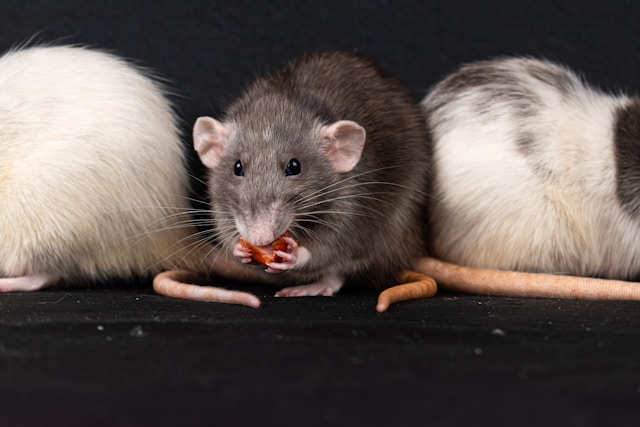
Rats are exceptionally intelligent animals that thrive on mental stimulation and learning. Their natural curiosity and food motivation make them excellent candidates for trick training. This guide will help you teach your pet rats fun behaviors while strengthening your bond and providing essential enrichment.
Why Train Your Rats?
Mental Stimulation
Training provides crucial mental exercise:
- Prevents boredom and related behavioral problems
- Keeps rats engaged and curious
- Builds confidence and problem-solving skills
- Strengthens the bond between rat and owner
- Provides alternative activities to destructive behaviors
Practical Benefits
Trick training has practical advantages:
- Makes health checks and handling easier
- Encourages rats to come when called
- Makes nail trimming less stressful
- Facilitates veterinary examinations
- Provides structured social interaction time
Natural Abilities
Rats excel at learning because they:
- Are highly intelligent and problem-solve naturally
- Have excellent memories and retention
- Are naturally curious and exploratory
- Are highly food-motivated
- Enjoy interacting with their human companions
Training Foundations
Understanding Rat Learning
Rats learn through association and consequences:
- They repeat behaviors that are rewarded
- They abandon behaviors that bring no reward
- They can learn complex chains of behaviors
- They respond well to clicker training
- They enjoy the challenge of learning new things
Essential Training Equipment
Gather these supplies before beginning:
- Clicker: Provides clear, consistent communication
- High-value treats: Peas, corn, yogurt drops, small pieces of fruit
- Training space: A small, rat-proofed area
- Target stick: Chopstick or similar object for targeting
- Patience and consistency: Your most important tools
Choosing the Right Time
Train when your rat is most receptive:
- During their active evening hours
- When they are alert but not overly excited
- Before their main meal (when food-motivated)
- In short sessions of 5-10 minutes
- When you are calm and can focus entirely on training
Basic Training Concepts
The Clicker Training Method
Clicker training provides clear communication:
- Click the instant your rat performs the desired behavior
- Immediately follow with a treat
- The click marks the exact moment of success
- Your rat learns what behavior earned the reward
- Phase out the clicker once the behavior is reliable
Capturing vs. Shaping
Two approaches to teaching behaviors:
Capturing: Wait for your rat to naturally perform a behavior, then click and reward. This works for behaviors your rat already does naturally.
Shaping: Reward successive approximations toward a final behavior. Start with a small part of the behavior and gradually require more.
Timing Is Everything
Perfect timing makes training effective:
- Click during the behavior, not after
- Treat immediately after clicking
- Keep sessions short to maintain focus
- End while your rat is still engaged
- Consistent timing leads to faster learning
Basic Tricks to Start
Come When Called
This essential behavior builds safety:
- Say your rat name clearly
- Wait for them to move toward you
- Click and treat any movement in your direction
- Gradually require them to come all the way to you
- Practice in different locations for reliability
Target Training
The foundation for many other tricks:
- Present the target stick near your rat
- Click and treat any investigation of the target
- Require touching the target with their nose
- Move the target slightly, requiring following
- Use targeting to guide other behaviors
Spin or Turn
A fun trick that builds body awareness:
- Hold a treat near your rat nose
- Move the treat slowly in a circle
- Follow their movement, clicking as they turn
- Gradually reduce hand motion, adding a verbal cue
- Practice in both directions
Intermediate Tricks
Stand Up
An adorable and useful trick:
- Hold a treat just above your rat head
- Click when they naturally rise to reach it
- Gradually raise your hand higher
- Add the cue “stand” or “up”
- Only reward standing on hind legs
Through the Hoop
A classic trick that looks impressive:
- Start with a large hoop on the ground
- Lure your rat through with a treat
- Click and treat on the other side
- Gradually raise the hoop off the ground
- Fade the lure and use a verbal cue
Fetch
A more advanced behavior:
- Start with a toy your rat likes to hold
- Click and treat for picking it up
- Click for taking one step toward you with it
- Gradually require bringing it closer
- Finally, only reward dropping it in your hand
Advanced Behaviors
Roll Over
This complex behavior requires patience:
- Start from a lying-down position
- Lure with a treat from shoulder toward hip
- Click for any weight shift in that direction
- Gradually require more rotation
- Build to a complete roll over several weeks
Agility Course
Create an obstacle course:
- Teach each obstacle separately first
- Include jumps, tunnels, and weave poles
- Connect behaviors into sequences
- Use targeting to guide your rat
- Great for mental and physical exercise
Basketball
A party trick that rats love:
- Use a tiny ball and a small hoop/toy basket
- Teach picking up the ball first
- Teach approaching and dropping near the basket
- Gradually require dropping the ball through the hoop
- This may take weeks to perfect—be patient
Troubleshooting Training Challenges
Rat Will Not Focus
If your rat seems distracted:
- Train in a quieter, less stimulating environment
- Use higher-value treats
- Shorten training sessions
- Ensure your rat is healthy and feeling well
- Train when they are naturally most active
Fearful or Nervous Rats
Build confidence before training:
- Spend more time on bonding first
- Hand-feed treats without training pressure
- Use very small movements
- Train in a familiar, safe space
- Celebrate very small successes
Stubborn or “Bored” Rats
Keep training interesting:
- Teach new behaviors regularly
- Keep sessions very short
- Use a variety of high-value rewards
- Take breaks from training to prevent burnout
- Make training like a game
Training Multiple Rats
Individual vs. Group Training
Decide on your approach:
- Train one rat at a time for focused learning
- Return trained rats to the cage before training others
- Some rats may learn by watching others
- Prevent competition for treats during training
- Track each rat progress individually
Managing Jealousy
Prevent training-related conflicts:
- Give equal attention to all rats
- Train all rats, even if some learn faster
- Separate rats during actual training sessions
- Provide non-training enrichment for everyone
- Watch for signs of resource guarding
Special Considerations
Senior Rats
Older rats can still learn:
- Adjust expectations for physical ability
- Focus on mental rather than physical tricks
- Provide more support and comfort
- Train for mental stimulation rather than perfection
- Adapt tricks to accommodate mobility limitations
Health Concerns
Always prioritize your rat well-being:
- Do not train sick or injured rats
- Watch for signs of pain or distress
- Adjust training during recovery periods
- Some tricks may not be appropriate for all rats
- Consult your veterinarian about restrictions
Age to Begin Training
Start at the appropriate age:
- Wait until rats are at least 8-10 weeks old
- Young rats have shorter attention spans
- Adult rats (4-12 months) often learn most quickly
- Senior rats benefit from continued mental stimulation
- It is never too late to start training
Beyond Tricks
Practical Behaviors
Train useful skills:
- Voluntary entry into a carrier for travel
- Stepping onto a scale for weight monitoring
- Presenting paws for nail trimming
- Opening mouth for dental checks
- Coming out of the cage on cue
Strengthening Your Bond
Training enhances relationships:
- Regular interaction builds trust
- Positive communication deepens bonds
- Rats enjoy the mental challenge
- Shared activities create positive associations
- Training time becomes quality time
Remember that training should always be fun and positive for both you and your rats. If either of you becomes frustrated, take a break and return later. The goal is enriching your rat life and strengthening your relationship, not perfection. Celebrate small successes and enjoy the process of learning together.